
Built around 1880 as a residential townhouse, the building is a very fine example of a Straits Settlements merchant’s home. Unusually long at over 130 feet (40 metres) it retains many of its original features – an intimate courtyard garden, a handsome timber staircase, geometric floor tiles, and large beams spanning lime plaster walls. The interior displays original blackwood Straits Chinese furniture and ornately carved wooden screens. The old-fashioned Nyonya kitchen preserves the original firewood stove and kitchen utensils.
House history
Stage 1
The title deed for 120 Armenian Street dates to 1875, and the house was already shown on the 1893 map. The house is deemed to have been built circa 1880.
Stage 2
When the road now called Kampong Kolam was made behind the house, the back portion of the house was renovated in 1924. The alterations were designed by the well-known architect Chew Eng Eam. The green colour scheme and some decorative features were probably introduced at this point.
Stage 3
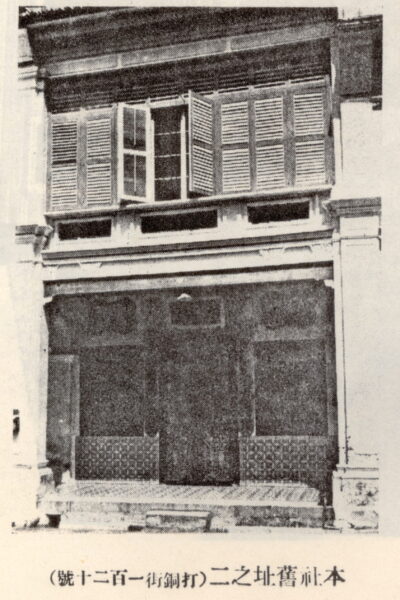
After the Second World War, the house was used as a warehouse for storing goods for Ch’ng Eng Joo. A moveable zinc awning was installed at the front air well. A photograph of part of the house in 1953 shows the carved wooden front doors. Sometime after that and some years before 1992 – the facade was altered. The wooden door was replaced with a collapsible metal grill. The timber louvered shutters were replaced with timber-framed glazed shutters.
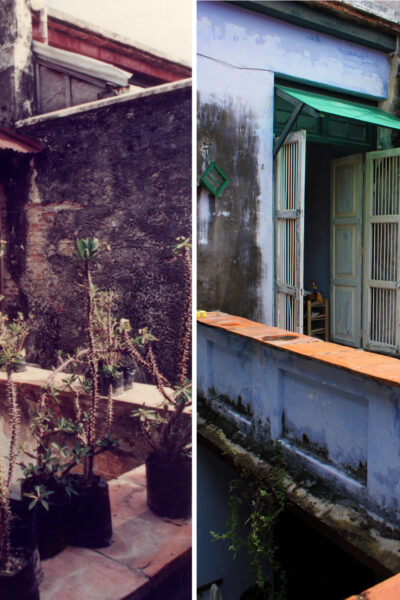
After 1992, the house was progressively restored. The roof was repaired, the front air well was opened up and the gutters replaced. The facade renovation was only undertaken in 2010.
Before and after photos:




 Chinese
  English